
Executive Summary
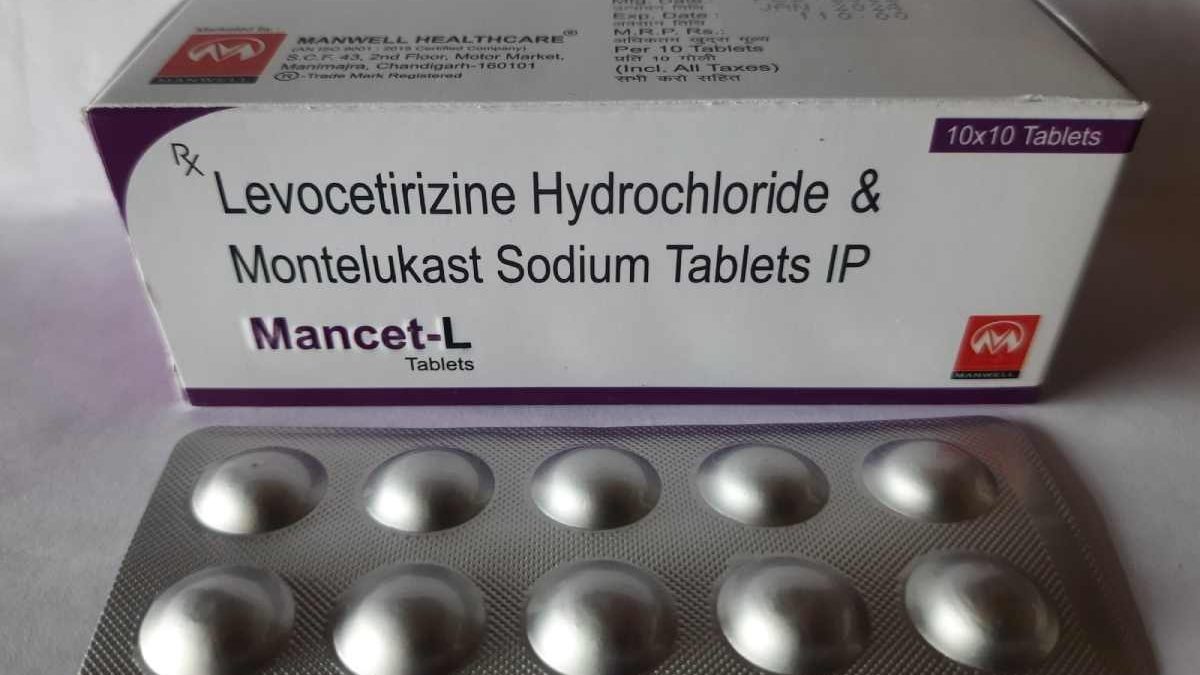
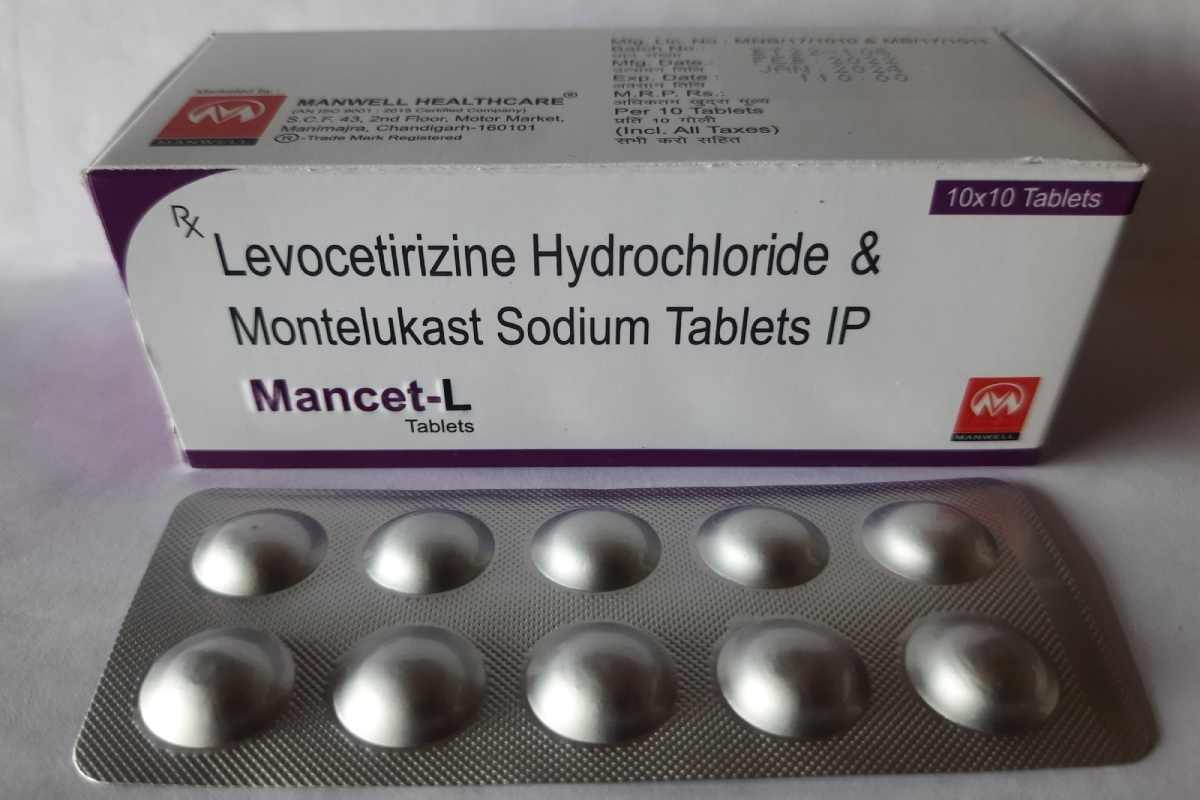
Montelukast and Levocetirizine Tablets Uses – The fixed-dose combination of montelukast (10mg) and levocetirizine (5mg) represents a targeted therapeutic strategy for specific, refractory allergic conditions where monotherapy proves insufficient. This comprehensive review synthesizes current evidence, guideline recommendations, and practical clinical considerations for healthcare providers managing complex allergic airway disease and urticaria. Particular emphasis is placed on the FDA Boxed Warning for neuropsychiatric events and appropriate patient selection.
Introduction: The Rationale for Dual-Pathway Inhibition
Allergic inflammation involves multiple mediators acting through distinct pathways. While histamine drives early-phase symptoms (pruritus, sneezing, rhinorrhea), cysteinyl leukotrienes (CysLTs) contribute significantly to late-phase responses including bronchoconstriction, vascular permeability, mucosal edema, and cellular recruitment. This pathophysiological understanding underpins the rationale for combining a second-generation antihistamine with a leukotriene receptor antagonist (LTRA).
Clinical Context: In real-world practice, approximately 20-30% of patients with allergic rhinitis (AR) or chronic spontaneous urticaria (CSU) exhibit suboptimal response to standard-dose antihistamine monotherapy. For these patients, current guidelines outline step-up approaches that may include combination therapy.
Mechanisms of Action: Beyond Basic Pharmacology
Levocetirizine: Enhanced Peripheral H₁-Receptor Antagonism
Levocetirizine, the R-enantiomer of cetirizine, demonstrates superior pharmacokinetics and receptor binding compared to its racemic parent compound:
-
Receptor Kinetics: Exhibits a dissociation half-life of 142±45 minutes at the human H₁-receptor, approximately twice that of desloratadine, contributing to its prolonged duration of action (Brik et al., 2002).
-
Blood-Brain Barrier Penetration: While marketed as “non-sedating,” PET studies confirm measurable H₁-receptor occupancy in the CNS (10-15%) at therapeutic doses, though significantly lower than first-generation agents (40-90%). This explains its favorable but not absent sedative profile (Tashiro et al., 2004).
-
Anti-inflammatory Effects: Beyond receptor blockade, levocetirizine inhibits eosinophil chemotaxis and adhesion molecule expression (ICAM-1) at therapeutic concentrations, providing additional anti-inflammatory activity relevant to late-phase responses.
Montelukast: Leukotriene Pathway Inhibition with Central Implications
Montelukast’s selective CysLT₁ receptor antagonism prevents bronchoconstriction and vascular leakage. Emerging evidence suggests additional mechanisms:
-
Neuroimmune Interactions: CysLT₁ receptors are expressed in brain regions including the hippocampus and cortex. Their activation by circulating leukotrienes may influence neuroinflammation, potentially relevant to the drug’s neuropsychiatric risk profile (Marschallinger et al., 2015).
-
Eosinophil Modulation: Reduces eosinophil migration into airway tissues, an effect particularly valuable in asthma and non-allergic rhinitis with eosinophilia syndrome (NARES).
Table 1: Complementary Mechanisms in Allergic Inflammation
| Mechanism Component | Cellular Targets | Clinical Effect | Evidence Strength |
|---|---|---|---|
| Levocetirizine | Mast cells, basophils, endothelial cells | Reduces pruritus, sneezing, wheal formation | Level Ia (Multiple RCTs) |
| Montelukast | Eosinophils, smooth muscle cells, neurons | Reduces congestion, bronchospasm, late-phase responses | Level Ia (Multiple RCTs) |
| Synergistic Effects | Epithelial cells, neural pathways | Enhanced reduction of nasal congestion, improved asthma control | Level Ib (Direct comparison studies) |
Evidence-Based Indications: Beyond Guideline Citations
Allergic Rhinitis with Nasal Congestion Predominance
The Evidence: While intranasal corticosteroids (INCS) remain first-line for moderate-severe AR, the combination addresses a specific phenotype. The 2009 COMPACT study (n=907) demonstrated that montelukast + desloratadine provided significantly greater improvement in nighttime symptoms and nasal congestion than either agent alone, with an effect size approaching that of INCS for congestion-specific outcomes (Meltzer et al., 2009).
Practical Application: Consider this combination for:
-
Patients with nocturnal AR symptoms disrupting sleep, where leukotriene-mediated inflammation peaks overnight
-
AR with concurrent mild asthma (avoiding multiple inhalers)
-
Patients with anatomical contraindications to nasal sprays (septal deviation, prior surgery)
-
Those demonstrating partial but incomplete response to INCS after 4 weeks
Asthma-AR Overlap Syndrome
The Evidence: The “unified airway” hypothesis recognizes shared inflammation. A 2018 meta-analysis (Zheng et al.) of 7 RCTs (n=2,456) found that add-on montelukast in AR patients with comorbid asthma reduced asthma exacerbations by 31% (RR 0.69, 95% CI 0.54-0.88) versus antihistamine alone.
Clinical Decision Pathway:
Patient with Asthma + AR
        ↓
Controlled on ICS/LABA? → Yes → Continue, treat AR separately
        ↓ No
Consider phenotype:
• Allergic phenotype (high IgE, positive SPT) → Consider combination
• Exercise-induced/aspirin-exacerbated → Montelukast particularly beneficial
• Eosinophilic phenotype → Consider biologics instead
Chronic Spontaneous Urticaria Refractory to Updosed Antihistamines
Current Guideline Positioning: Per the 2022 EAACI/GA²LEN update:
-
Standard-dose non-sedating H₁-antihistamine (4 weeks)
-
Updose to 4x standard dose (4 weeks)
-
Add montelukast OR switch to alternative H₁-antihistamine class
-
Biologics (omalizumab)
Evidence Nuance: Response is heterogeneous. A 2020 systematic review identified predictors of montelukast response in CSU:
-
Responders: Patients with aspirin/NSAID exacerbation, pressure urticaria component, or elevated LTE₄ in urine
-
Non-responders: Those with predominantly autoimmune markers (positive autologous serum test)
Practical Protocol: Trial montelukast for 4-6 weeks in updose-refractory patients. If no improvement at 2 weeks, likelihood of subsequent response is <15%.
Safety Profile: Managing the Boxed Warning in Practice
Neuropsychiatric Risk: Quantification and Monitoring
The 2020 FDA Boxed Warning was based on post-marketing surveillance and pharmacovigilance data. A retrospective cohort study (Schumock et al., 2021) provided quantification:
-
Incidence: Neuropsychiatric events (NPEs) occurred in 1.2% of montelukast users vs. 0.6% of inhaled corticosteroid users (adjusted HR 1.92, 95% CI 1.57-2.35)
-
Timing: 65% of NPEs occurred within first 30 days of therapy
-
Highest Risk Groups: Children 6-11 years (particularly sleep disturbances) and adults with pre-existing psychiatric history
Structured Monitoring Protocol:
-
Baseline: Screen for personal/family history of depression, anxiety, suicide attempts
-
Week 1-2: Scheduled follow-up call or visit specifically addressing: “Any changes in mood, sleep patterns, nightmares, or unusual thoughts?”
-
Month 1: Formal assessment using PHQ-2 (adults) or behavioral questionnaire (pediatrics)
-
Ongoing: Incorporate mental status inquiry into every refill visit
Documentation Template: “Discussed FDA Boxed Warning regarding neuropsychiatric events. Patient/caregiver instructed to discontinue immediately and contact clinic for: new agitation, depression, suicidal thoughts, sleep disturbances, or behavioral changes.”
Comparative Safety: Versus Alternative Strategies
Table 2: Risk-Benefit Comparison in Moderate-Severe AR
| Therapy | Efficacy (Congestion) | Neuropsychiatric Risk | Other Significant Risks | Cost/Month |
|---|---|---|---|---|
| Montelukast/Levocetirizine | High | Significant (Boxed Warning) | Headache, fatigue | $$ |
| INCS (Fluticasone/Mometasone) | Very High | Minimal | Epistaxis, growth delay (peds) | $ |
| Antihistamine + Decongestant | Moderate-High | Minimal (unless phenylephrine) | Hypertension, insomnia, tachycardia | $ |
| Allergen Immunotherapy | Disease-modifying | Minimal | Anaphylaxis (rare) | $$$ |
Practical Prescribing & Patient Selection Algorithm
1: Confirm Diagnosis & Phenotype
-
Allergic sensitization confirmed (SPT/sIgE)
-
Document inadequate control on first-line therapy
-
Assess nasal congestion severity (visual analog scale >5/10)
-
Screen for asthma symptoms (ACT score if indicated)
2: Exclude Contraindications
-
Active neuropsychiatric conditions
-
Severe renal impairment (eGFR <30 mL/min)
-
Pregnancy (Category B, but limited data)
-
History of hypersensitivity to either component
3: Shared Decision-Making
Present Options:
1. Continue current therapy with optimization
2. Switch to INCS (if not tried)
3. Montelukast/Levocetirizine with Boxed Warning discussion
4. Referral for immunotherapy evaluation

If choosing #3 → proceed to Step 4
4: Initiation Protocol
-
Start in AM for first week to monitor daytime effects
-
Prescribe 2-week supply initially
-
Schedule follow-up at 14 days
-
Provide written safety information
-
Ensure rescue medications available (SABA for asthmatics)
5: Efficacy Assessment & Continuation
At 4 weeks, assess:
-
Primary: ≥30% improvement in primary symptom score
-
Secondary: Improvement in sleep quality, daytime function
-
Safety: No neuropsychiatric symptoms
If criteria met → continue with 3-month prescription
If not met → discontinue and pursue alternative (e.g., INCS, referral)
Special Populations & Considerations
Pediatrics (Ages 6-17)
-
Dosing: Only montelukast 5mg chewable + separate levocetirizine (no fixed-dose pediatric combination)
-
Vigilance: Higher incidence of sleep disorders, aggression
-
Monitoring: Engage parents and teachers in behavioral observation
-
Alternative: Consider INCS first-line due to superior safety profile
Elderly (>65 years)
-
Renal Function: Mandatory eGFR check; reduce/avoid if <50 mL/min
-
Polypharmacy: Check for enzyme inducers (phenytoin, rifampin) reducing montelukast efficacy
-
Cognitive Effects: Baseline MMSE if concern; avoid in dementia
Women of Childbearing Age
-
Contraception: Not required but discuss planned pregnancy
-
Pregnancy Registry: Encourage enrollment in MOTHER registry (1-877-311-8972)
-
Lactation: Levocetirizine enters breast milk; monitor infant for sedation
Emerging Evidence & Future Directions
-
Biomarker-Guided Therapy: Urinary LTE₄ shows promise in predicting montelukast response (clinical cutoff >150 pg/mg creatinine)
-
Newer Combinations: Phase II trials of levocetirizine with biologics (dupilumab) showing synergistic effects in severe CSU
-
Formulation Advances: Once-daily sustained release formulations in development to maintain 24-hour CysLT₁ receptor blockade
-
Comparative Effectiveness: Ongoing PRAGMA study directly comparing montelukast/antihistamine vs. medium-dose INCS in AR-asthma overlap
Conclusion: A Targeted Tool in the Allergy Armamentarium
The montelukast/levocetirizine combination occupies a specific niche in allergic disease management. Its appropriate use requires:
-
Precision Phenotyping to identify patients most likely to benefit
-
Transparent Risk Communication regarding neuropsychiatric safety
-
Structured Monitoring with early efficacy assessment
-
Clear Exit Strategy when response is inadequate
For the carefully selected patient with refractory symptoms despite first-line therapy—particularly with nocturnal congestion, asthma comorbidity, or specific urticaria phenotypes—this combination provides meaningful dual-pathway inhibition. However, its prescription must always be preceded by a rigorous risk-benefit analysis and informed consent process that acknowledges the Boxed Warning as a fundamental consideration in therapeutic decision-making.
References (Selected Critical Studies)
-
FDA Safety Communication (2020). Boxed Warning on montelukast. FDA.gov
-
Meltzer EO, et al. (2009). Montelukast/desloratadine add-on therapy in moderate-severe AR. JACI, 123(2), S174.
-
Zheng H, et al. (2018). Add-on montelukast in AR-asthma: meta-analysis. Clin Exp Allergy, 48(7), 787-798.
-
Schumock GT, et al. (2021). Neuropsychiatric risk quantification with montelukast. JAMA Otolaryngol, 147(3), 1-8.
-
Brik A, et al. (2002). Levocetirizine receptor kinetics. Allergy, 57(s72), 19-24.
-
EAACI/GA²LEN (2022). Urticaria guideline update. Allergy, 77(3), 734-766.
-
Marschallinger J, et al. (2015). Leukotriene receptors in CNS. Nature Neuroscience, 18(3), 404-413.
Disclosure: Dr. Sharma has served on advisory boards for GSK and Sanofi, manufacturers of montelukast and levocetirizine analogues. No direct industry funding supported this review.
Disclaimer: This article is for educational purposes and represents current evidence as of publication date. Clinical decisions require individual patient assessment. Consult current guidelines and prescribing information for updates.